2026-11-14 ·
How Florida Humidity and Long Vent Runs Slow Your Dryer
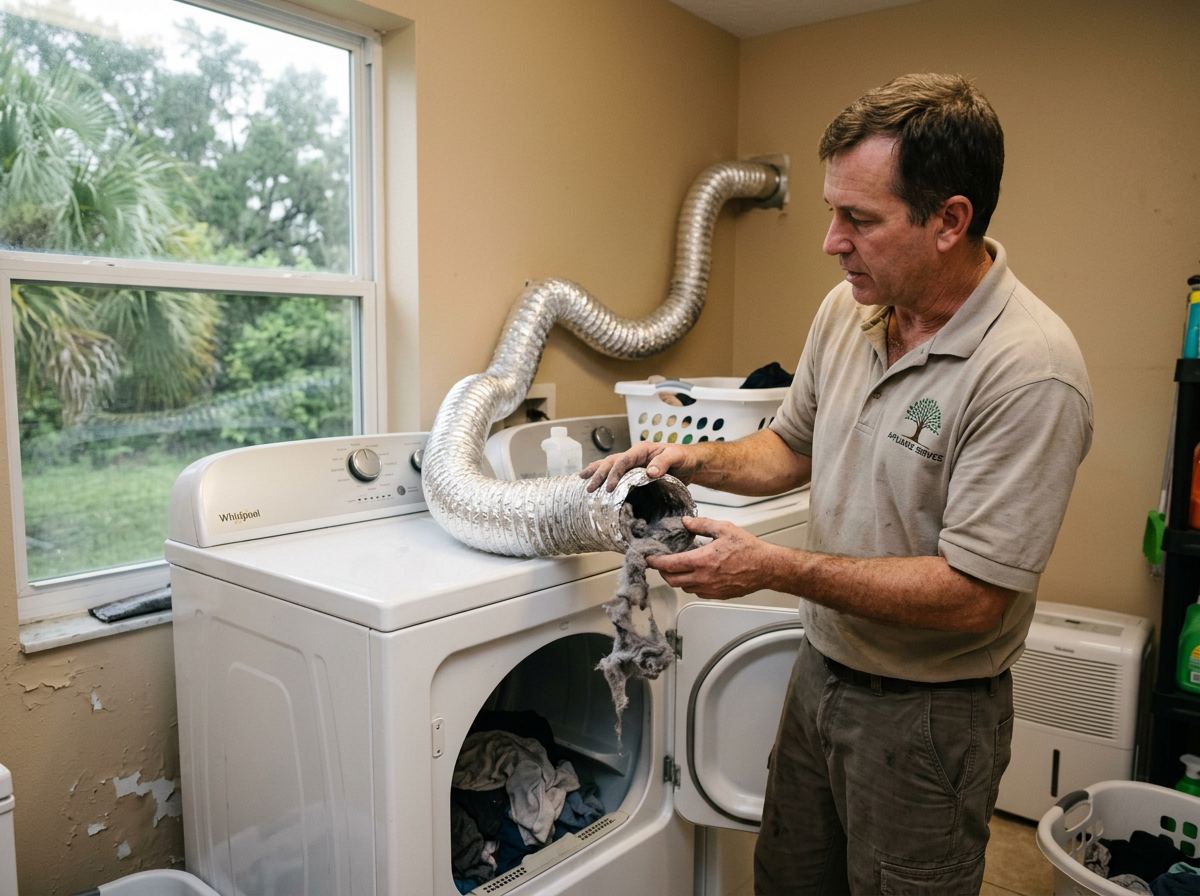
In Central Florida, persistent humidity levels and vent runs that stretch beyond 20 feet commonly extend drying cycles by 20 to 35 minutes compared with shorter, drier conditions. The moisture-laden air outside makes it harder for the dryer to push humid exhaust outward, while longer ducts increase resistance and trap lint that further restricts airflow.
Humidity and Its Effect on Exhaust Airflow
Central Florida summers keep outdoor relative humidity above 70 percent for weeks at a time, so the air a dryer must expel already carries substantial water vapor. When that moist exterior air mixes with the warm, wet air leaving the drum, the temperature differential shrinks and evaporation slows. In Clermont neighborhoods built near the lakes, afternoon thunderstorms add another spike in ambient moisture that can last into the evening. Dryers must work against this constant back-pressure instead of venting into drier inland air found farther north. Over repeated loads the reduced efficiency shows up as clothes that feel damp after the timed cycle ends. Homeowners notice the heating element runs longer before the thermostat signals completion, which raises energy use even though the machine itself is not malfunctioning. Regular lint removal from the lint trap and exterior vent hood helps, yet the underlying humidity remains a fixed local condition that no amount of cleaning can eliminate. For hands-on help, see our dryer repair in Clermont page. We cover loads that take too long to dry in more detail on its own page.
How Long Vent Runs Develop in Clermont Homes
Many single-story homes in Clermont place the laundry room on an interior wall or at the rear of the house to keep noise away from living areas. This layout forces the vent duct to travel 15 to 35 feet before reaching an exterior wall, often with two or three 90-degree elbows added to route around cabinets or HVAC equipment. Each elbow and extra foot of rigid or flexible duct increases static pressure, so the blower motor must push harder to maintain exhaust velocity. Over time, even small amounts of accumulated lint on the inside walls of those long runs compound the restriction. Citrus Tower Appliance technicians frequently find that vents installed during original construction were never shortened when additions or kitchen remodels altered the original path. The result is a system that meets code on paper yet performs poorly under Central Florida’s humidity load. Shorter, straighter metal duct runs with minimal elbows remain the most effective fix when remodeling allows. Our page on dryer vent problems explains how we test for it.
Combined Impact on Drying Performance
When high humidity and long vent runs occur together, the dryer experiences both reduced evaporation inside the drum and increased back-pressure at the exhaust point. A load that normally finishes in 45 minutes may require 65 to 80 minutes, and the clothes still emerge warmer and damper than expected. The thermostat cycles the heating element on and off more frequently because the exhaust air never cools enough to trigger the shut-off sensor. In extreme cases the thermal fuse or high-limit thermostat trips, shutting the machine down mid-cycle. These symptoms appear consistently in Clermont homes where the vent terminates near a covered porch or under a deep roof overhang that traps moist air. The combination does not damage the dryer immediately, but the extra run time accelerates wear on the motor, belt, and rollers. Citrus Tower Appliance recommends measuring actual vent length and noting nearby moisture sources before assuming the appliance itself needs replacement. The same applies to laundry rooms in Winter Garden.
Safe Homeowner Checks Before Scheduling Repair
Unplug the dryer before any inspection. Remove the lint trap and clean it thoroughly, then vacuum the housing beneath it. Next, go outside and locate the exterior vent hood; clear any visible lint or debris from the flap and screen. With the dryer still unplugged, pull it away from the wall just far enough to inspect the connection point where the duct meets the machine. Look for crushed or kinked sections and confirm the duct is rigid metal rather than plastic or foil. Do not disassemble any sealed electrical components or gas connections. If the vent run feels unusually long or the exterior flap stays partially open, note the observations for the technician. These steps help Citrus Tower Appliance determine whether the slowdown stems from the local humidity and vent design or from an internal component that requires service.